
- Email: jigar211290@gmail.com
15+ Years Restoring Knee Alignment & Function
Knee Realignment Expert
High Tibial Osteotomy – Precise Alignment, Long-Term Relief
Suffering from medial knee pain or early osteoarthritis on the inner side of the knee? Dr. Jigar Desai specializes in High Tibial Osteotomy (HTO), a procedure that realigns the leg to reduce stress on damaged cartilage and delay the need for knee replacement.
-
Thorough Assessment
Detailed imaging and analysis of weight-bearing alignment to determine surgical suitability.
-
Precise Surgical Technique
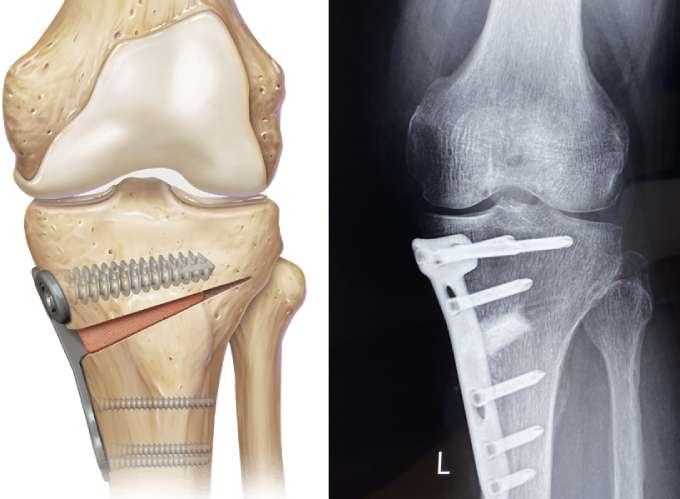
Bone wedge adjustment using plates and screws to correct alignment and relieve pressure.
-
Improved Function & Joint Preservation
HTO helps maintain your natural joint, improving mobility and delaying total knee replacement.
Regain Natural Knee Function
Book a consultation with Dr. Jigar Desai and discover if High Tibial Osteotomy is right for you.
Schedule ConsultationStatistics
High Tibial Osteotomy Cases Handled by Dr. Jigar Desai
With advanced expertise in knee realignment surgeries, Dr. Jigar Desai has successfully treated hundreds of patients suffering from medial knee pain and early osteoarthritis. His approach combines precise diagnostics, advanced surgical techniques, and a focus on joint preservation.
0+
HTO Surgeries Performed
0+
Years of Knee Realignment Experience
0+
Joint Preservation Successes
0%
Patient Satisfaction Rate
Comprehensive Guide to High Tibial Osteotomy (HTO)
Learn about the indications, benefits, preparation, surgical details, and rehabilitation involved in High Tibial Osteotomy. Expert guidance from Dr. Jigar Desai to help you make informed decisions and regain joint alignment and mobility.
1) Indications for HTO
- Medial compartment osteoarthritis (inner knee)
- Varus knee deformity (bow-legged alignment)
- Patients under 60 wanting joint preservation
- Chronic knee pain with load imbalance
- Desire to delay total knee replacement
- Good range of motion and ligament stability
2) Pre-Surgical Planning
- Weight-bearing full-leg X-rays
- CT/MRI to assess joint surfaces
- Alignment analysis to determine correction angle
- Evaluation of joint stability and cartilage
- Medical clearance and physiotherapy prep
- Pre-habilitation to strengthen muscles
3) Surgical Procedure Overview
- Small incision along the upper tibia
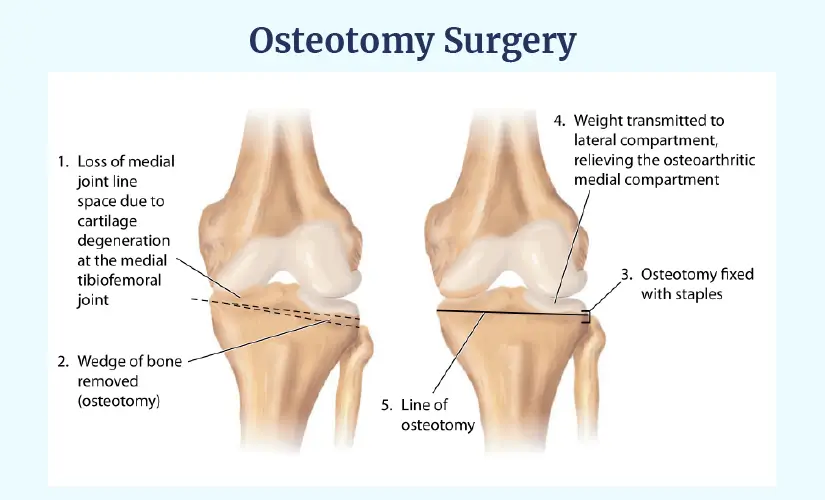
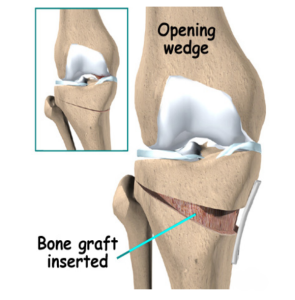
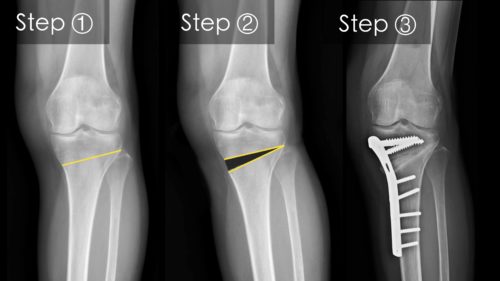
- Bone wedge cut and adjusted to correct alignment
- Fixation with metal plate and screws
- Intraoperative fluoroscopy for precision
- Possible use of bone grafts if needed
- Procedure duration: ~1.5 to 2 hours
4) Postoperative Recovery Timeline
- Hospital stay: 2–3 days
- Partial weight-bearing with crutches (first few weeks)
- Gradual return to full weight-bearing in 6–8 weeks
- Stitch removal in 10–14 days
- Swelling and mild discomfort for a few weeks
- Full recovery: 3 to 6 months
5) Rehabilitation Goals
- Regain full knee range of motion
- Strengthen quadriceps, hamstrings, and glutes
- Improve balance and proprioception
- Prevent muscle atrophy and stiffness
- Gradual transition to full activity
- Long-term lifestyle modifications
6) Benefits of HTO
- Relieves pressure on damaged knee cartilage
- Delays or avoids total knee replacement
- Preserves natural joint function
- Improves walking ability and knee alignment
- Reduces pain during movement
- Enables active lifestyle for younger patients
7) Risks & Considerations
- Infection or delayed bone healing
- Nerve or blood vessel injury (rare)
- Need for hardware removal in some cases
- Overcorrection or undercorrection
- Requires long-term commitment to rehab
- Not suitable for all knee arthritis types
8) Long-Term Care & Monitoring
- Regular orthopedic follow-ups
- X-rays to monitor bone healing and alignment
- Joint-friendly activities like walking, swimming
- Healthy weight management
- Routine home exercises for muscle maintenance
- Monitoring for hardware-related discomfort
Consult for High Tibial Osteotomy (HTO)
Suffering from inner knee pain, bow-legged alignment, or trying to avoid a full knee replacement? Dr. Jigar Desai specializes in High Tibial Osteotomy to realign the knee, relieve pain, and preserve joint function with expert diagnostics and precision surgery.
High Tibial Osteotomy – Dr. Jigar Desai
Struggling with early-stage knee arthritis or bow-legged alignment? High Tibial Osteotomy (HTO) could be the joint-preserving solution you need. With over 15 years of orthopedic expertise, Dr. Jigar Desai specializes in precision-based HTO procedures to realign the knee joint, relieve pain, and delay the need for total knee replacement.
- • Personalized evaluation with detailed imaging and gait analysis
- • Correction of leg alignment to redistribute load on the knee
- • Minimally invasive surgical approach with faster recovery
- • Ideal for younger patients with isolated medial compartment arthritis
- • Comprehensive post-operative rehab for joint stability and function
Why Choose Dr. Jigar Desai?
High Tibial Osteotomy – Questions & Answers
Explore the purpose, procedure, and benefits of High Tibial Osteotomy, a joint-preserving surgery for early knee arthritis. Dr. Jigar Desai specializes in personalized HTO care that promotes alignment, mobility, and pain relief.
Dr. Jigar Desai uses advanced imaging, surgical precision, and post-operative rehabilitation to deliver successful HTO outcomes — realigning the knee to reduce arthritis pain and extend joint life.
HTO is a surgical procedure that re-aligns the knee joint by reshaping
the upper part of
the tibia (shinbone) to shift weight away from the damaged part of the
knee, commonly
used for early arthritis or bow-legged deformities.
Ideal candidates are usually younger, active individuals with
early-stage medial
compartment knee osteoarthritis and a varus (bow-legged) deformity, but
with otherwise
healthy joint surfaces.
HTO preserves the natural knee joint, allows for continued physical
activity, and can
delay or even prevent the need for a total knee replacement, especially
in younger
patients.
The surgeon creates a small wedge in the upper tibia and adjusts the
angle to offload
pressure from the damaged area. The bone is stabilized using a plate,
and healing occurs
gradually over several weeks.
Recovery typically includes a few days of hospital stay, use of crutches
initially,
followed by a structured physiotherapy program. Most patients return to
normal
activities in 3–6 months with improved pain and alignment.
Consultations can be booked via the official website or by calling the
clinic directly.
Dr. Jigar Desai will evaluate your case and determine whether HTO is the
best treatment
option for your knee condition.